

There will be 5 major factors to balancing diving pool chemicals in a chlorine pool. These 5 factors are key to keeping your chlorine pool water biochemistry and biology in balance, in addition to should be examined on an every week basis to aid reduce the possibility involving unwanted algae and bacteria from expanding. Algae and germs will cause a pool to switch green, attract mosquitoes along with other bugs in addition to make a pool less healthy or perhaps even dangerous to be able to swim in. This is a breakdown of the particular important matters to appear at to guarantee a clean secure pool to move in.
1) Drinking water Hardness Level
Normal water hardness level will be the first key to balancing swimming pool chemicals, and involves two components: Immediate Hardness Level in addition to Indirect Hardness Levels.
Direct Hardness Degree - Hardness in your water is immediate result of typically the source your water comes from. Once the water hardness large high, it makes balancing swimming swimming pool chemicals difficult. Typically the biggest things that will make water hard are dirt and even partials (Magnesium plus calcium from the dirt and ambiance to be exact) that are throughout your water if it arrives at your property from exactly where it came through. If you get the water from a well it will certainly have a various hardness level as opposed to the way if you get this from the metropolis you live in. Some communities have harder water than others. It just about all depends on the source.
Indirect Solidity Level - Solidity in the pool is usually indirectly affected by the various chemical compounds that dissolve inside your pool's water. While you add chemicals to your pool and these people get the job done, they acquire utilized and start off to add in order to the harness degree of your pool's water chemistry.
When water gets as well hard it provides no room in order to let the harmful chemicals that balance a pool area to dissolve and even work, and it has a new tendency to commence creating deposits or minerals on the pool's floor in addition to walls and pool equipment because of the substantial concentration with the nutrients in the normal water. When water solidity is to low (this is not really the case as well often) water is definitely corrosive and can start eating away from at your areas. In this circumstance you can add a chemical called Calcium Chloride in order to bring the harness level up.
Excellent water hardness amounts should be between 200-400 ppm involving minerals to get safe and efficient. If water in your pool becomes way too hard the only method to resolve you should drain your pool area partially or completely, and refill it with new fresh water.
2) Chlorine Levels
The chlorine stage in the pool area is the second key point to balancing diving pool chemicals. Any time talking about sanitizing a chlorine pool area and killing unwanted algae and bacterias, chlorine is typically the most important substance to get. It is important to keep on this chemical inside balance though, due to the fact if you have got too much it can irritate swimmers' pores and skin and eyes plus be unhealthy, in case you have also little then dirt and bacteria may grow.
You can find 2 forms chlorine requires when it will be inside your pool. My partner and i call the several forms "Useable Chlorine" and "Used Chlorine". Combined (Useable plus Used) from the "Total Chlorine" in the pool area.
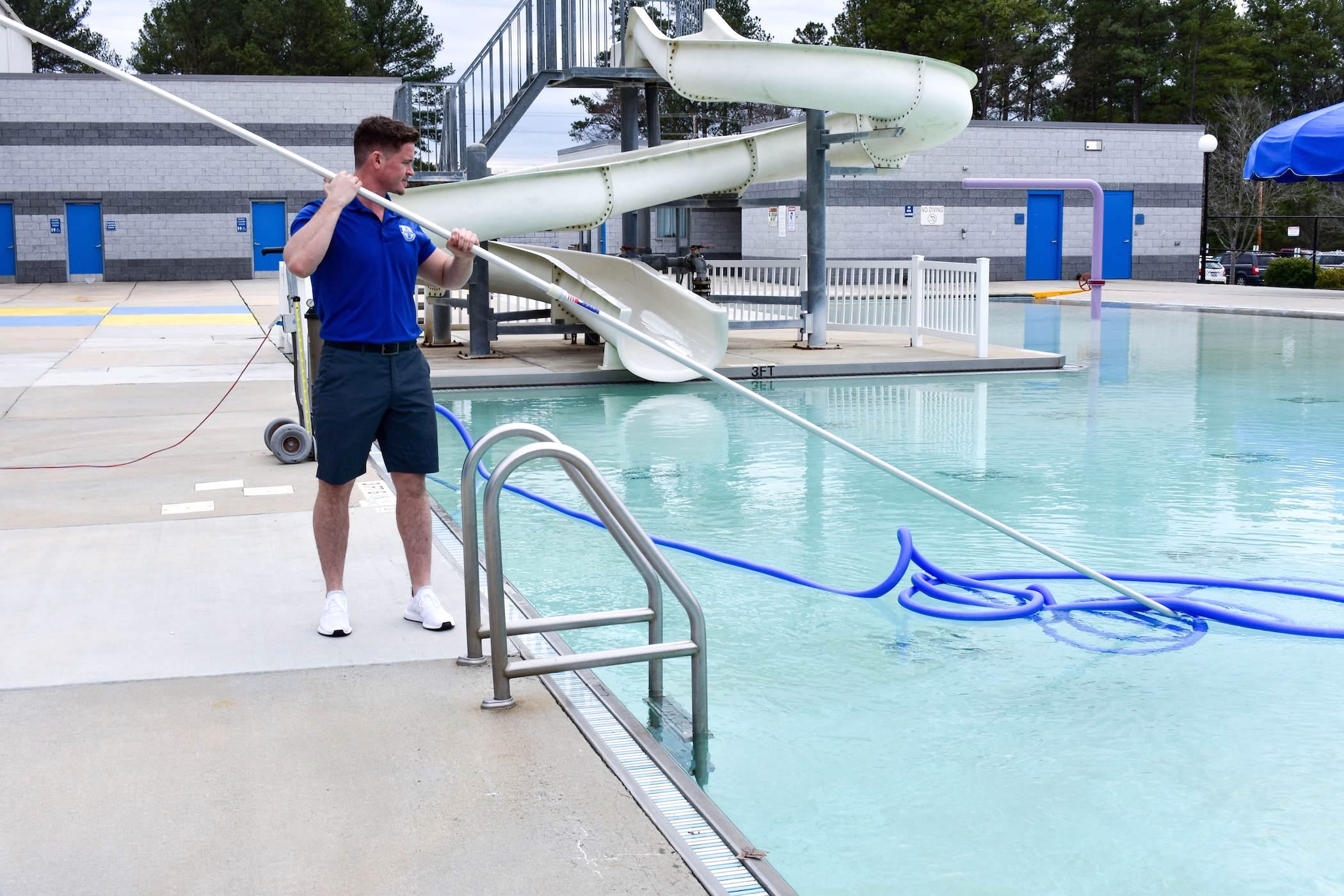
1) Useable Chlorine (AKA Free Chlorine) is the chlorine that is definitely working, sanitizing and killing unwanted wrack and bacteria in your pool. This particular useable, or free chlorine level, will be the most significant chemical to help keep within balance. The minimum amount useable chlorine generally there should be found in your pool is 1 ppm. Less than this and even there will not necessarily be enough in order to sanitize and kill. The most useable chlorine there should be within your pool is 10 ppm. More than this, plus it becomes irritating and unsafe in order to swim in. The ideal range regarding perfect pool hormone balance is to need 1-3 ppm of free, useable chlorine within your pool.
2) Used Chlorine is the chlorine in your own pool which has currently done its task and is at this point ineffective. It will be the part of the chlorine that is merely floating around incorporating to the firmness of your drinking water and it is definitely not killing anything. Sometimes when people check chlorine levels inside pools, they notice that there is certainly a good volume of "Total Chlorine", but that will not make sure that there is enough able to be used chlorine killing things because the utilized chlorine is done and used up.
This particular is where "Shocking" a pool comes along into play. Jolt is an more large dose regarding useable or free of charge chlorine and when a new pool is shocked the useable chlorine sanitized, kills and even burns off of the used chlorine. It will help provide room inside the hardness level of the pool for the particular useable chlorine to move around and do its job in keeping your pool spending safe.
3) PH LEVEL Balance
PH equilibrium is the 3rd key to balancing floating around pool chemicals. PH LEVEL is the list to show just how acidic or alkaline (basic) pool drinking water is. The best for a swimming pool is only being within the basic side. Any PH LEVEL tester has amounts that will teach you how acidic or perhaps basic your normal water is. Water that will reads lower as compared to 7 is acidulent, and water that reads higher than 7 is fundamental. The perfect vary for swimming is between 7. 2 and 7. 8.
Low PH : If a pool area is too acidic or perhaps has a low PH then your water will corrode fixtures or equipment or the surface of your respective pool. This also will cause chlorine to be killed off in addition to stops its usefulness. In the event the PH is usually too low swimmers' skin and eyes can become inflammed as well. When the PH levels is too lower, Sodium Bicarbonate (Soda Ash) needs to be able to be added to your current pool.
High PH - If the pool is too fundamental or has a new high PH, then simply the water can certainly also be not comfortable to swim inside, and the water will become cloudy. Some sort of High PH may also cause calcium plus metals to arrive out of the pool surface produce stains and deposits on pool gear and walls. Muriatic Acid is typically the chemical that is definitely added to the pool to more affordable the PH levels if it becomes too basic.
4) Refresher Degree
Conditioner levels could be the fourth major to balancing going swimming pool chemicals. Cyanuric Acid ("Stabilizer" or perhaps "Conditioner") is typically the chemical that is added to the pool to secure the chlorine cash. Chlorine is influenced and dissolved rapid by the ultraviolet (uv) rays of the sun. Cyanuric Chemical p protects chlorine coming from the sun. If a pool is filled, Cyanuric Acid needs to always be extra first so that will the chlorine can do its job. Also, as evaporation occurs or a swimming pool is partially exhausted and refilled, cyanuric acid also requirements to be additional. The ideal level of cyanuric acid solution in a swimming pool should be involving 30-80 ppm for great effectiveness thus that the chlorine is just not harmed simply by the sun. If the level regarding cynanuric acid ever reads higher compared to 100 ppm, and then it should become lowered. In this kind of a situation, the only way to lower it is to to some extent drain the swimming pool and add fresh water.
5) Entire Alkalinity (TA) Stability
Total Alkalinity is usually the fifth step to balancing swimming swimming pool chemicals. The Complete Alkalinity, or PLOCKA, is the way of measuring of how much alkaline substances are generally in your pool's water. When looking at your pool TA level it will go through between 80-120 ppm. When Visit the website is in this range, it assists stabilize your PH LEVEL level and inhibits rapid PH changes. If your TA level is to low, metals commence to corrode, your current pool walls in addition to floor become etch and stained, the PH level bounces up and down and water can easily become green from algae growth. If your TA levels is too substantial your water can easily become cloudy, typically the PH level will certainly be hard in order to keep balanced, chlorine are not as efficient plus your pool will constantly need even more acid.
If you wish to boost the level associated with your TA, add sodium bicarbonate (Soda Ash) to your current pool. It's the only chemical that could raise the level regarding your TA with out drastically changing the particular PH level. When you need to be able to lower the PLOCKA level in the pool, add Muriatic acid.
In summary, the particular key to managing swimming pool chemicals is checking their levels regularly and even adjusting them as needed. If you or the firm you hire to maintain your pool keeps an eye about these 5 issues you will always include a clean, secure and enjoyable pool area to swim in all year long.
Notice: This article lists the essential chemicals needed for pool upkeep. https://quiethyena6.bloggersdelight.dk/2024/01/04/strategies-to-improve-your-diving-pool-safety/ should always become taken into account when coping with some of these substances. Please consult some sort of professional and substance manufacturer for recommendations on all chemicals listed above for the amounts to be used plus the process of introducing them to your pool. All associated with these chemicals happen to be dangerous and is very unsafe if utilized in the bad way. The manufacturer's pool chemical substance safety data should always be consumed into account when dealing with these kinds of chemicals.